
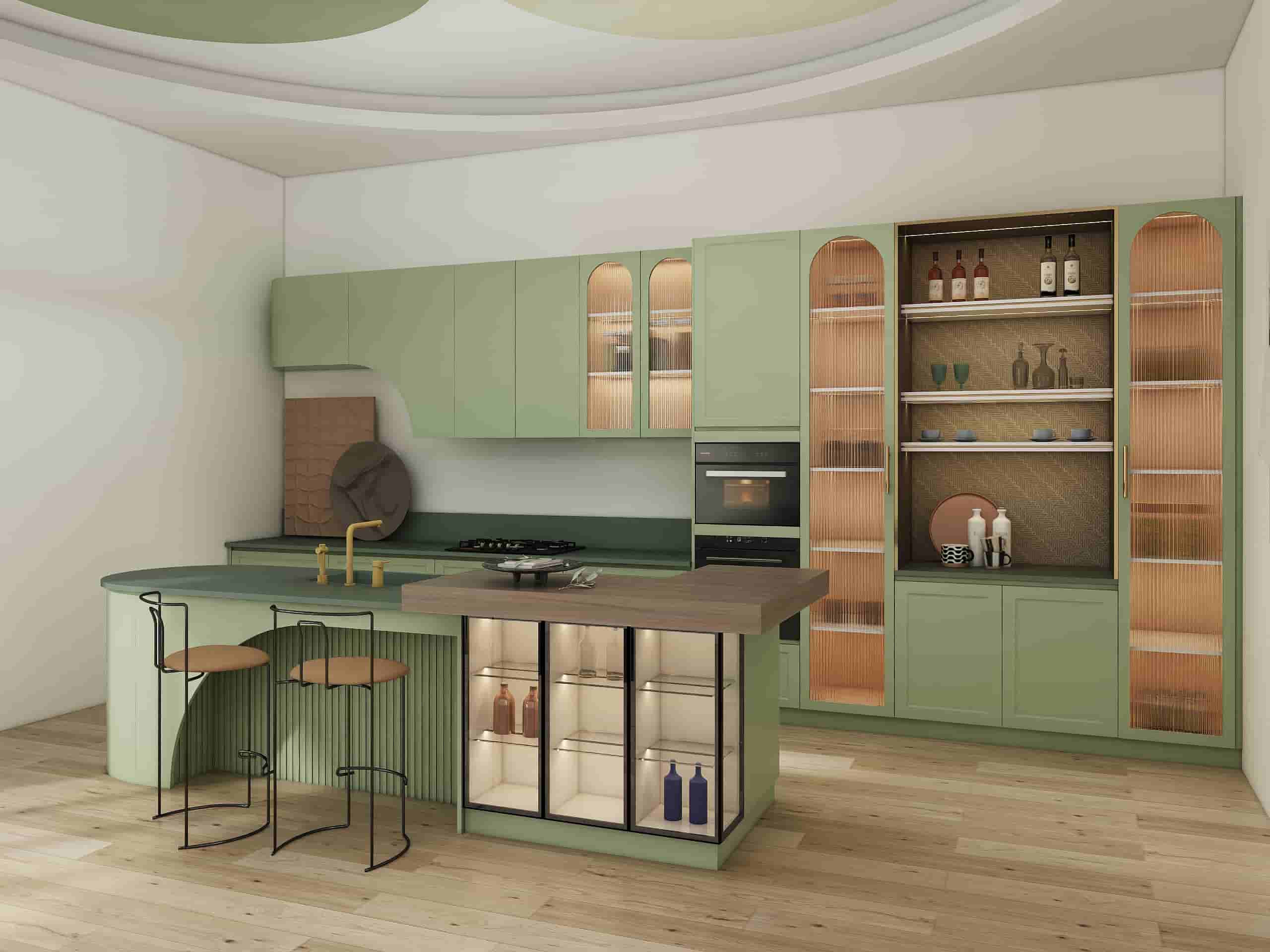
In the world of interior design, the kitchen is no longer just a place to prep meals; it is the architectural soul of the home. When embarking on a renovation, homeowners inevitably face the “Custom Crossroads”: Should you go with a reliable mass-market brand, or invest in high-end bespoke cabinetry?
To the untrained eye, a cabinet is a box with a door. But to the connoisseur, the difference between “mass” and “luxury” is the difference between a fast-fashion suit and a Savile Row masterpiece.
1. Material Pedigree: Beyond the Surface
The most immediate difference lies in the “DNA” of the cabinets.
- Mass-Market Customization: Primarily utilizes Particle Board (MFC) or standard MDF. While durable and meeting environmental standards, the finishes are often limited to melamine or basic laminates.
- Luxury Bespoke: The material palette is limitless. We’re talking exotic wood veneers, hand-applied piano lacquers, liquid metal finishes, and Italian slate. High-end brands often use aluminum honeycomb or marine-grade plywood for superior stability.
2. The Art of Invisibility: Precision Craftsmanship
In luxury design, the goal is often to make the “engineering” disappear.
- The Mass-Market Look: Employs standard EVA edge banding, where a faint glue line may be visible. Layouts often rely on standard modular blocks, sometimes requiring “filler strips” to fit irregular spaces.
- The High-End Finish: Luxury is defined by Laser Edge Banding or seamless lacquering. It embraces “Cabinet-Wall-Door Integration,” where every millimeter is accounted for, creating a flush, architectural aesthetic without unsightly fillers.
3. “Black Tech” and Hidden Hardware
If the cabinetry is the body, the hardware is the nervous system.
- Mass-Market: Standard, high-quality hardware (like entry-level Blum or Hettich) ensures smooth sliding and basic soft-close functionality.
- Luxury Bespoke: Features “invisible” technology. Think electric-drive drawers, hidden motorized islands, and integrated lighting that adjusts color temperature. Appliances are often “fully integrated,” clad in matching materials to remain completely hidden.
4. Design Philosophy: Template vs. Soul
This is the divide between filling a space and creating an experience.
- The Modular Approach: Designers often work within the constraints of a software library, arranging pre-set modules to fit your floor plan.
- The Bespoke Narrative: The design is original and architectural. It considers your specific lifestyle—whether you are a wine collector or a professional chef—optimizing ergonomics and natural light flow.
5. The White-Glove Lifecycle
| Feature | Mass-Market Custom | Luxury Bespoke |
|---|---|---|
| Lead Time | 30–45 Days | 3–6 Months |
| Installation | Standard contractor | Master craftsmen / Factory-supervised |
| Durability | 10–15 years | Lifetime (Generational quality) |
| Service | Reactive (Call when it breaks) | Proactive (Scheduled maintenance) |
The Verdict: Which is Right for You?
Choose Mass-Market Custom if your priority is efficiency and ROI. If you want a clean, modern, and durable kitchen that stays within a sensible budget, industry giants provide incredible value.
Choose Luxury Bespoke if you view your home as a statement of identity. If you have a passion for tactile perfection and architectural continuity, high-end cabinetry is an investment in your long-term quality of life.
“Mass-market cabinetry helps you organize your life; luxury cabinetry helps you enjoy it.”
Frequently Asked Questions
1. What is the single biggest difference between bespoke and mass-market cabinetry?
While mass-market cabinetry relies on modular templates (pre-set sizes and styles), luxury bespoke cabinetry is architectural. It is designed from scratch to fit the specific dimensions of your home, eliminating the need for “filler strips” and allowing for a seamless, flush integration with your walls and floors.
2. Why does luxury cabinetry have a significantly longer lead time?
Unlike mass-market brands that mass-produce components in advance, luxury cabinets are made-to-order. This involves sourcing rare materials like exotic veneers or hand-applied lacquers and employing precision techniques like laser edge banding. The process often takes 3 to 6 months to ensure artisan-level quality and structural integrity.
3. What are "integrated appliances" in the context of high-end kitchens?
In high-end design, appliances are often “fully integrated” or “hidden.” This means your refrigerator, dishwasher, and even wine coolers are clad in the exact same material as your cabinetry. When closed, the appliances are completely invisible, creating a clean, unified look that feels more like a living space than a utility room.
4. Is the durability of luxury cabinets truly superior to standard options?
Yes. While mass-market cabinets usually use standard particle board (MFC), luxury bespoke makers often utilize advanced (base materials) such as aluminum honeycomb or marine-grade plywood. These materials are far more resistant to moisture, warping, and weight-bearing stress, often lasting a lifetime rather than just 10–15 years.
5. Can I achieve a luxury "look" on a mass-market budget?
You can certainly replicate the visual style of a luxury kitchen using high-quality mass-market brands. However, you will likely sacrifice the tactile experience (the feel of the materials), the “black tech” (automated hardware), and the millimetric precision of a truly bespoke fit. Mass-market is an excellent choice for ROI, while bespoke is an investment in lifestyle and unique artistry.


