
Walk-In Closet Design: How To Turn “Storage” Into A Daily Ritual ?

A walk-in closet isn’t just a bigger wardrobe. Done well, it becomes the quiet “control room” of your morning—where decisions feel easy, outfits look better, and clutter stops leaking into the bedroom.

Most closets fail for one reason: they’re designed like furniture, not like a routine. The secret to a truly inspiring walk-in closet design is to start from how people move, reach, pause, and decide—then wrap storage around that behavior.

Below is a deep, practical design framework you can use on real projects, with layout logic, proportions, lighting strategy, material choices, and case-style references you can adapt to almost any space.

1.Start With The Real Brief: What Problem Are You Solving?


Before you draw a single cabinet line, ask three questions:

  • What slows you down every morning?
    Is it hunting for matching pieces? Creased shirts? Shoes scattered? Poor lighting that makes black look navy?
  • What type of wardrobe do you actually own?
    A closet for “imaginary you” always disappoints. A closet for real you feels like a luxury.
  • What does “calm” look like to you?
    Some people feel calm when everything is hidden. Others feel calm when their favorite items are visible like a boutique.

These answers decide everything: door style, open vs closed storage, how many drawers you need, where you place mirrors, and whether the closet should feel like a gallery or a quiet box.


2. Choose The Right Layout (Based On Shape + Habits, Not Taste)

Think of layout like a floor plan for movement.

Single-Sided (One Wall of Storage)
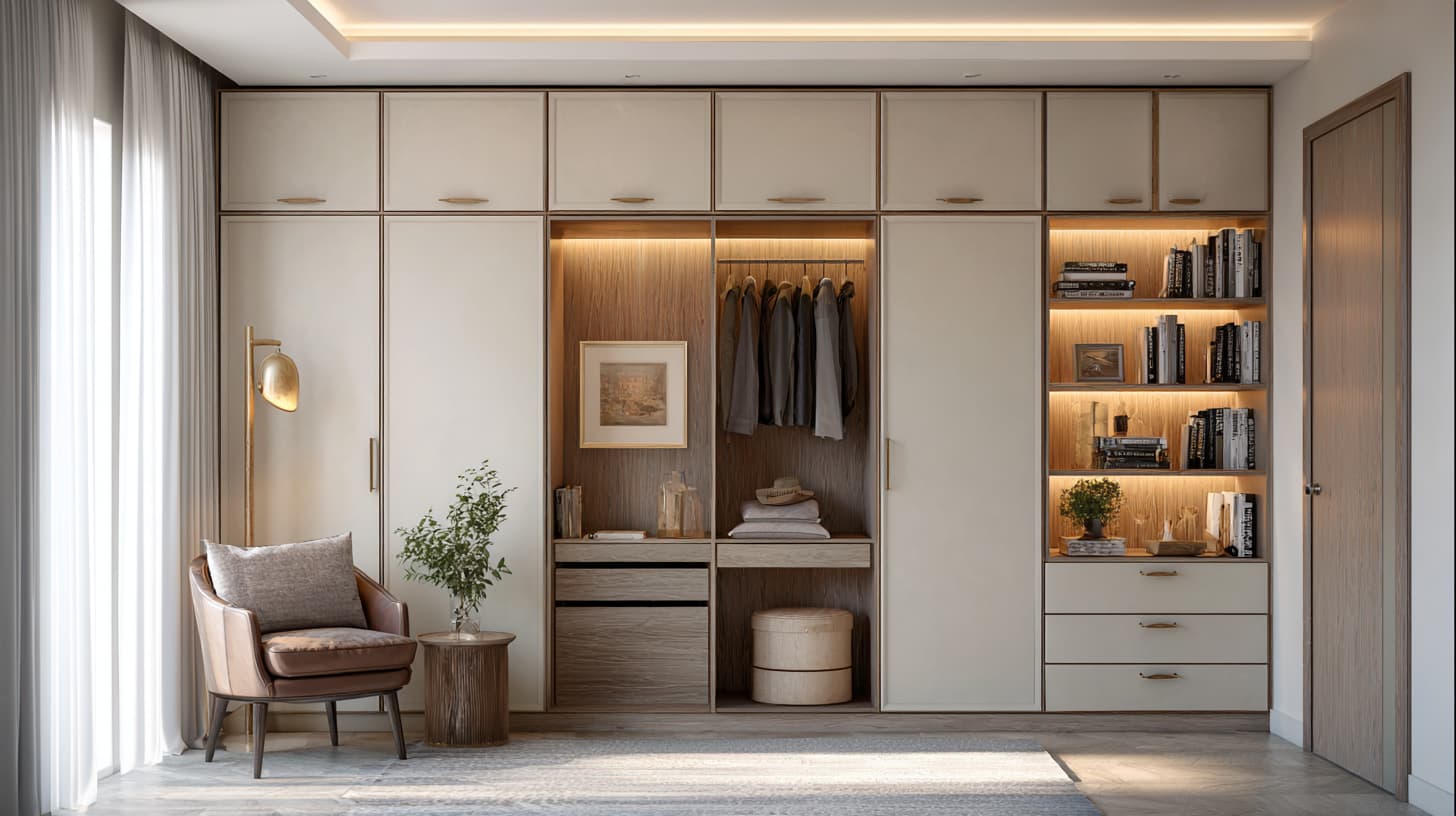
Walk-In Closet Design

Best for narrow spaces and “small walk-in closets.” The design win here is simplicity: one clean storage wall, one clear walkway, and one focal moment at the end (mirror, artwork, or a slim bench). This layout feels bigger than it is because your eye reads it as a corridor, not a room.

Design tip: If you can only afford one “premium” feature, make it the drawer system. Drawers create order faster than shelves.

Double-Sided (Two Walls Facing Each Other)
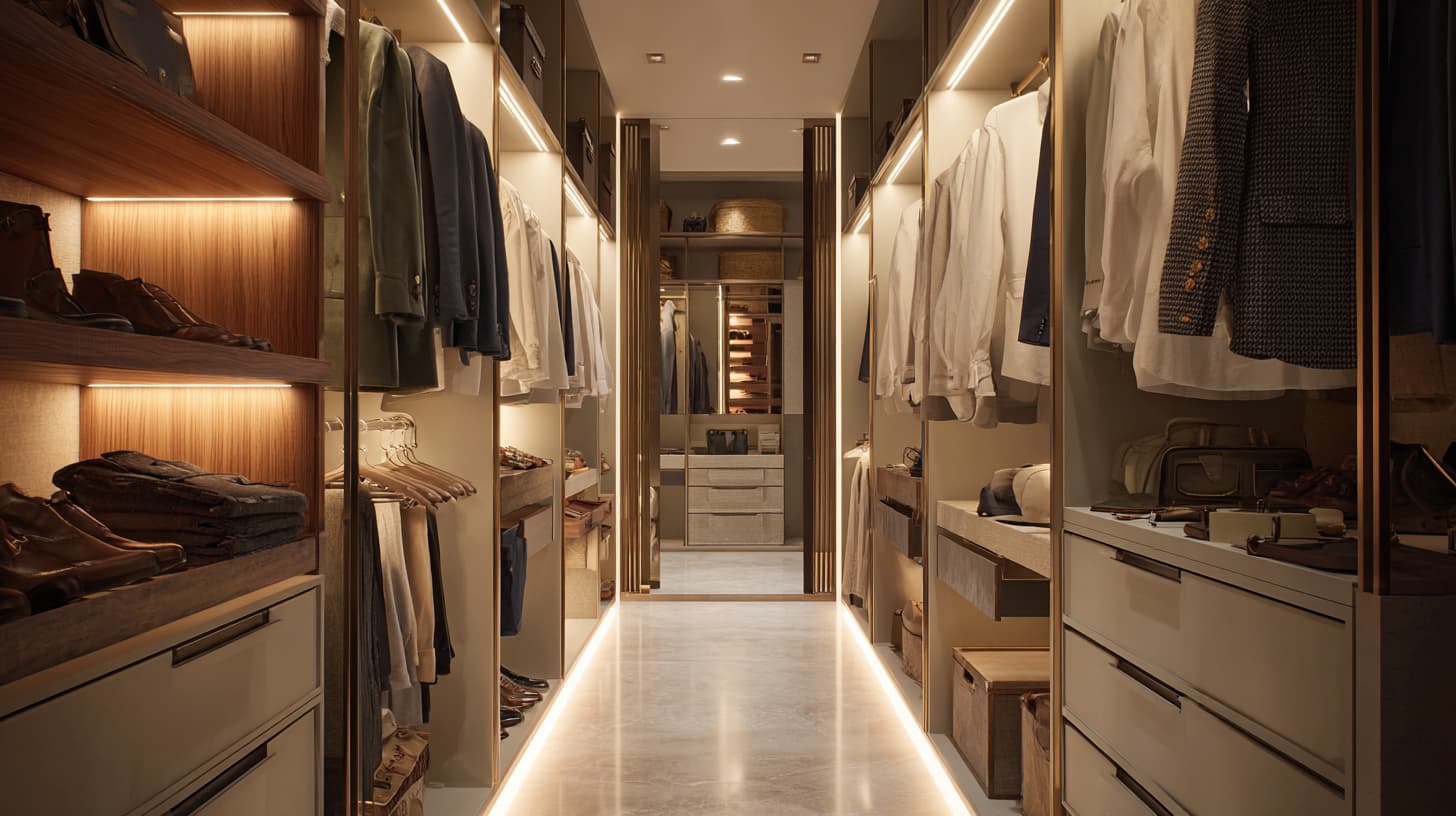
walk in closet 7

Best for couples, heavy wardrobes, or a space that can support comfortable circulation. This layout naturally supports “left/right” zoning, which is why it’s so easy to maintain. One person, one side. Or: hanging on one side, folded on the other.

Design tip: This layout works best when you’re strict about depth. Too deep and you’ll crash drawers into knees, or hangers into the walkway.

L-Shaped (Two Walls Meet)
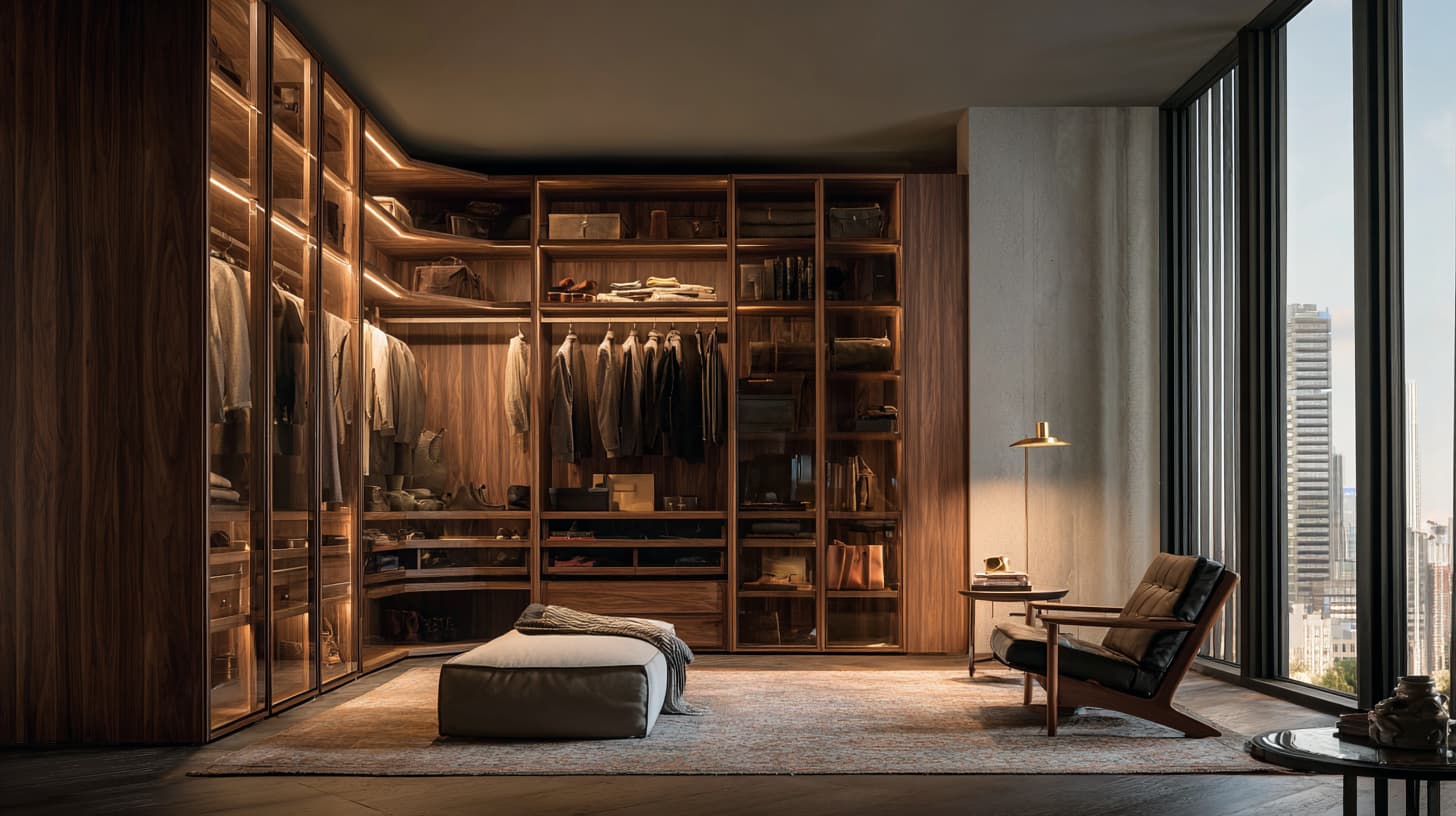
walk in closet 9

Best for awkward corners, doors placed in the wrong spot, or when you want a walk-in feel without building a full room. L-shape is underrated because it “solves” irregular spaces elegantly. It also gives you a natural third wall for a full-height mirror or a dressing niche.

Design tip: Don’t force deep corner hanging. Put your “static” storage there (bags, folded items, seasonal).

U-Shaped (Three Walls)
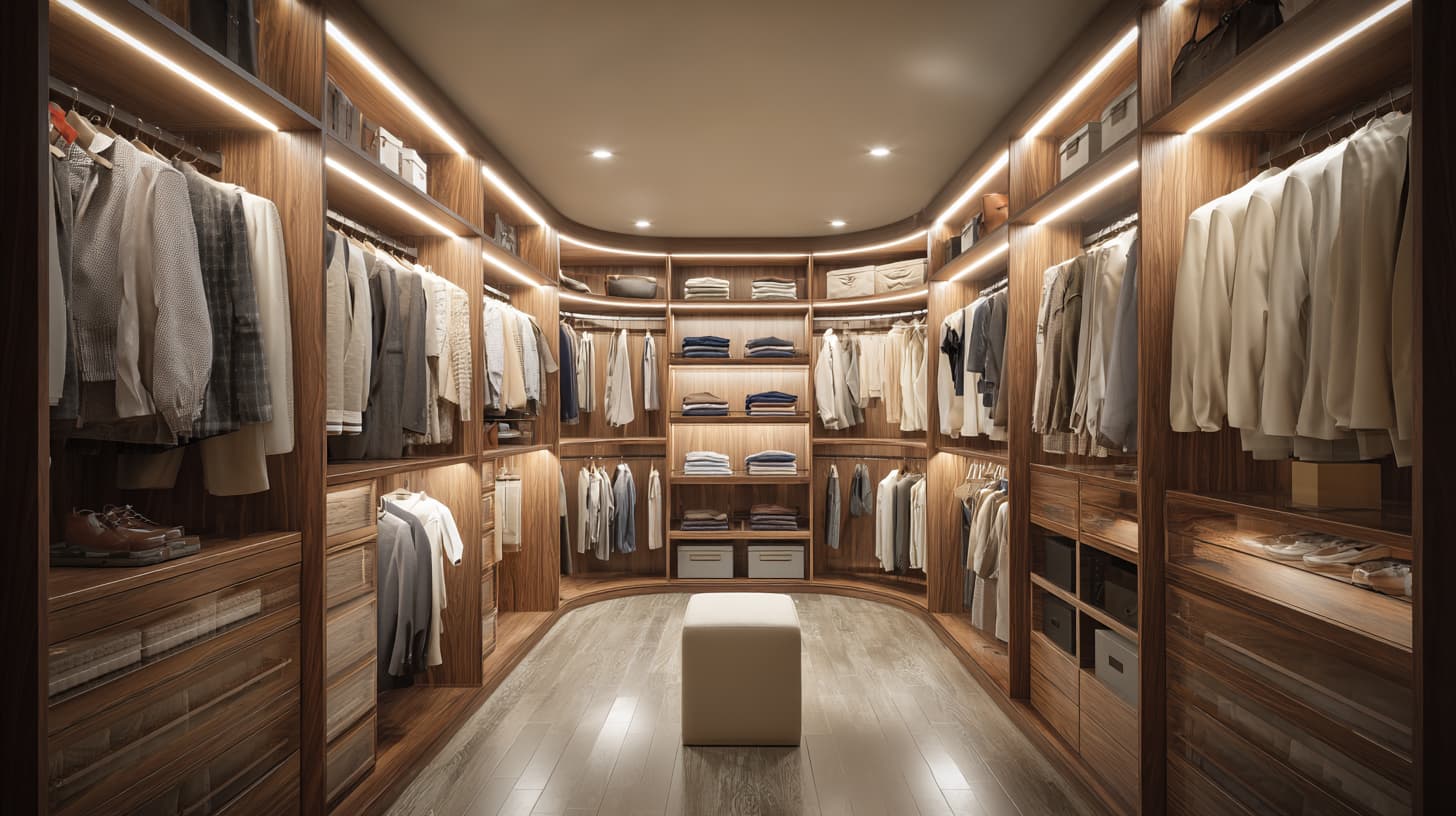
walk in closet 6

Best for maximum capacity and “boutique feel.” U-shape is the closest you get to a private store. It can be stunning—but only if the center remains calm and the zones are intentionally composed.

Design tip: Make the wall you see first (when you enter) the most visually pleasing, not the most dense. Put long hanging or utility storage on the less-visible wall.

3.Build The Closet Around Three Invisible “Zones”

A walk-in closet becomes inspiring when it supports a smooth routine. The most reliable planning method is to design around three functional zones:

Zone A: The Landing Zone (Entry / Drop-Off)

This is where you hang today’s jacket, put your bag, drop keys, and remove shoes. It prevents mess from entering the closet and turning into chaos.

Even a small niche can do the job: a hook, a small shelf, a tray, and a hidden basket.

Zone B: The Dressing Zone (Decision + Mirror + Light)

This zone is where style happens: trying, pairing, checking fit, fixing details. If you don’t create this zone, the bedroom becomes the dressing zone—and clutter wins.

What it needs:

  • A full-height mirror (or mirrored panel)
  • Good face lighting
  • A small surface for watch, perfume, jewelry, phone
  • Optional bench/ottoman for comfort and “hotel” feel

Zone C: The Storage Zone (Everything Has A Home)

This is the engine: hanging, folded, drawers, shoes, bags, accessories. The closet works when the storage zone is predictable. You should know where things go without thinking.

A rule that helps: Daily items at eye and hand height. Seasonal items up high. Rare items down low.

4. The “Golden Ratios” Of Walk-In Closet Storage

People tend to over-build hanging and under-build drawers. That’s why closets become messy: small items get no structure. A practical, high-performing mix often looks like:
  • A meaningful amount of drawers (socks, underwear, tees, gym wear, accessories)
  • A mix of short hanging (shirts, jackets) and double hanging (tops + bottoms)
  • A dedicated long hanging section (dresses, coats)
  • Controlled open shelves (folded knits, jeans, handbags)
  • A shoe zone designed for how you actually store shoes (pairs together, visible, easy to grab)
If you want an inspiring closet, don’t chase maximum volume. Chase maximum clarity.

Why drawers feel “luxury”

Drawers create instant categories. Categories create calm. Calm creates the feeling of high-end living—even if the materials are simple.

5. Lighting: The Real Difference Between “Nice” And “Wow”

Lighting is not decoration here. It’s functionality and emotion.

Layer 1: Ambient (Ceiling)

Your general light should make the room feel safe, clean, and easy to navigate.

Layer 2: Task (Mirror + Dressing Area)

If you care about looking good, mirror lighting matters. Bad light makes you second-guess colors and waste time.

A simple goal: your face and outfit should be evenly lit without harsh shadows.

Layer 3: Accent (Inside Cabinets / Shelves)

Cabinet lighting turns storage into display. It’s what creates the boutique effect.

Inspiring trick: Use lighting to guide the eye. Illuminate your “favorite wall” and let the utility sections stay quieter. That’s how luxury retail works: focus and calm.

6. Materials & Finishes: Make It Feel Calm, Not Busy

A walk-in closet can look expensive even with a modest budget if the finish strategy is disciplined.

Choose One “Quiet” Base

A soft wood tone, warm neutral, or matte light color works well. The closet should be a background for clothing, not the competitor.

Add One “Identity Material”

This could be:

  • smoked glass doors
  • a textured panel
  • bronze hardware
  • a stone-like countertop in the dressing niche

One accent is usually enough. Too many accents = visual noise.

Hardware matters more than people expect

Smooth drawer slides, soft-close hinges, and a confident handle feel are daily touchpoints. Even if nothing looks “premium,” the closet feels premium when it moves well.

7. Details That Make A Closet Feel Custom (Even Without A Huge Budget)

These are the features clients remember:

  • A real place for jewelry and watches
    Not a random drawer. A shallow, organized tray system changes everything.
  • A tall mirror that feels “intentional”
    The mirror should belong to the design, not look like an afterthought.
  • A bench or a soft seat
    This is the difference between “storage room” and “dressing room.”
  • A hidden dirty laundry strategy
    If laundry has no designed home, it becomes a pile that ruins the space.
  • Ventilation and moisture awareness
    Especially if the walk-in closet is near a bathroom. A great closet protects clothing long-term.


8. Six Case-Style Concepts You Can Copy

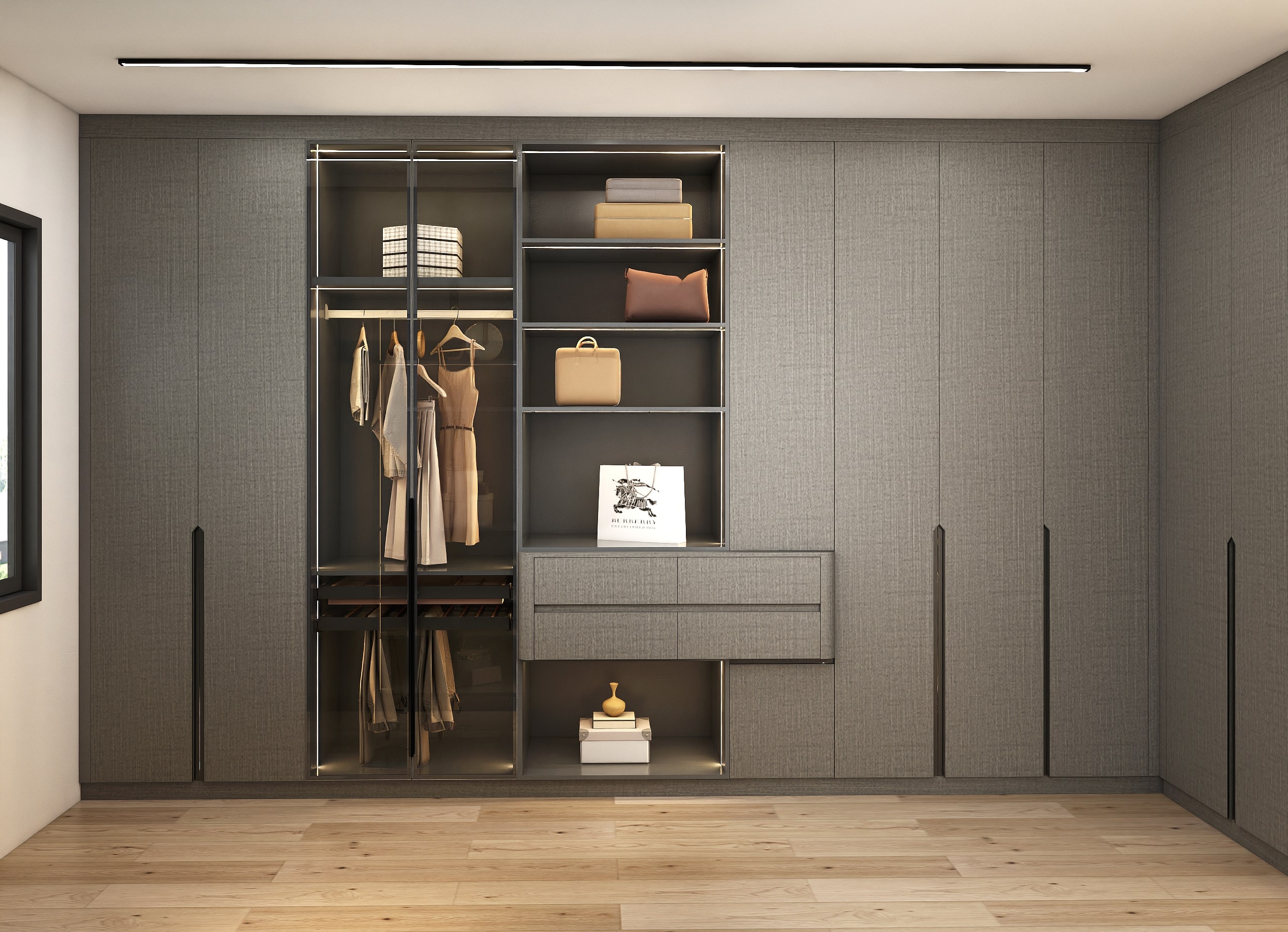
Case 1: Small Single-Sided Closet That Feels Like A Gallery
 

custom wardrobe banner 2 2 5 min

You keep one side clear, one side fully organized. The end wall is a mirror with a slim console shelf. The inspiration here is not “more storage,” it’s less friction. You always see what you need, and the walkway stays clean.

Key move: prioritize drawers and short hanging, keep shelves limited and curated.

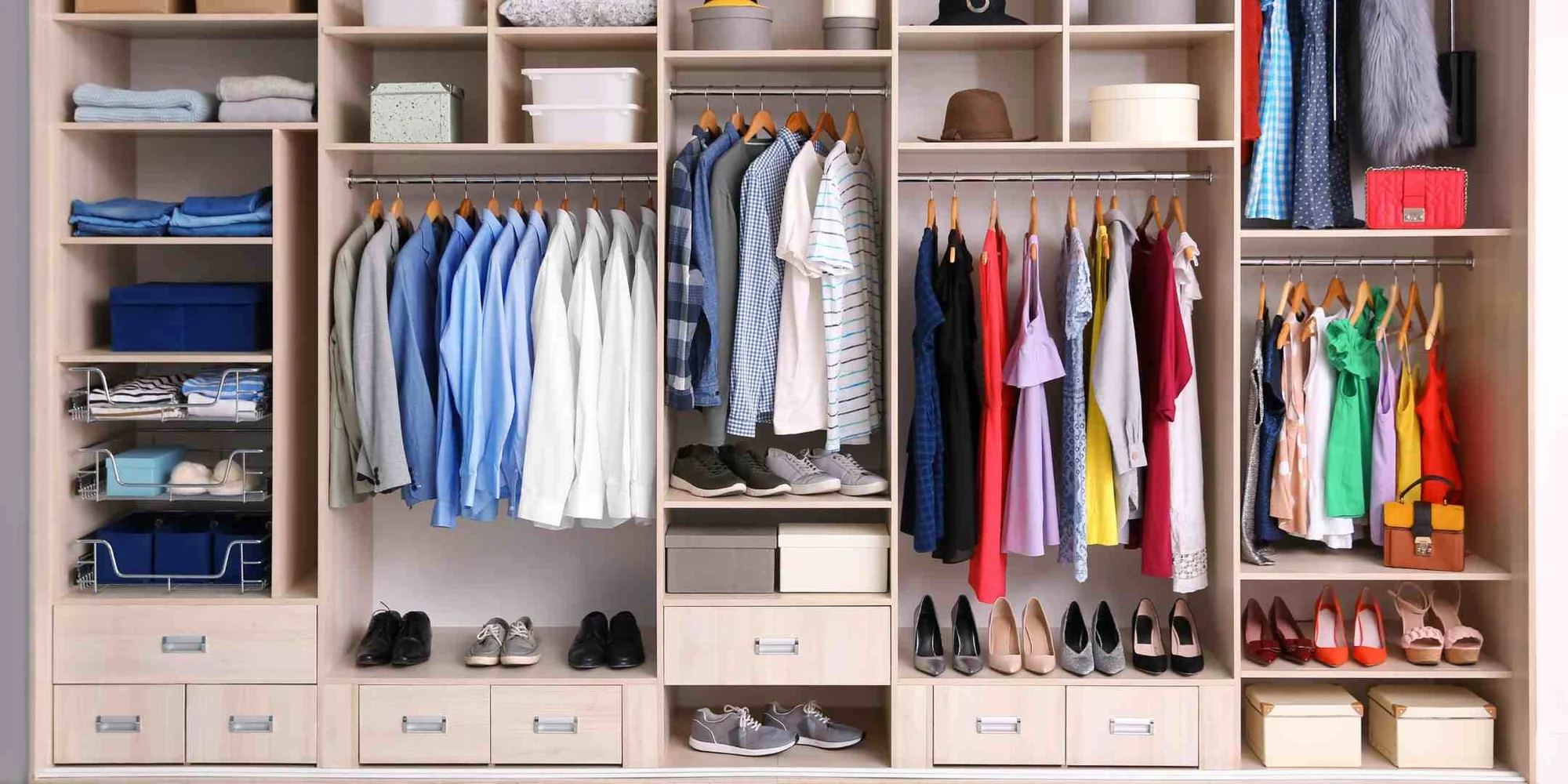
Case 2: Couple’s Double-Sided Closet With Left/Right Identity
a his and hers wardrobe organising for couples megafurniture

Each person gets their own rhythm. One side can emphasize hanging, the other folding. The magic is psychological: when ownership is clear, maintenance becomes effortless.

Key move: avoid shared “misc” shelves. Shared shelves become clutter magnets.

Case 3: L-Shaped Closet With A Dressing Niche

L-Shaped Closet With A Dressing mirror on the left

Two walls store, the third wall becomes a dressing scene: mirror + light + bench. This is perfect when the floor plan is weird, because the dressing niche “anchors” the space emotionally.

Key move: put the mirror where the light works, not where there is leftover space.

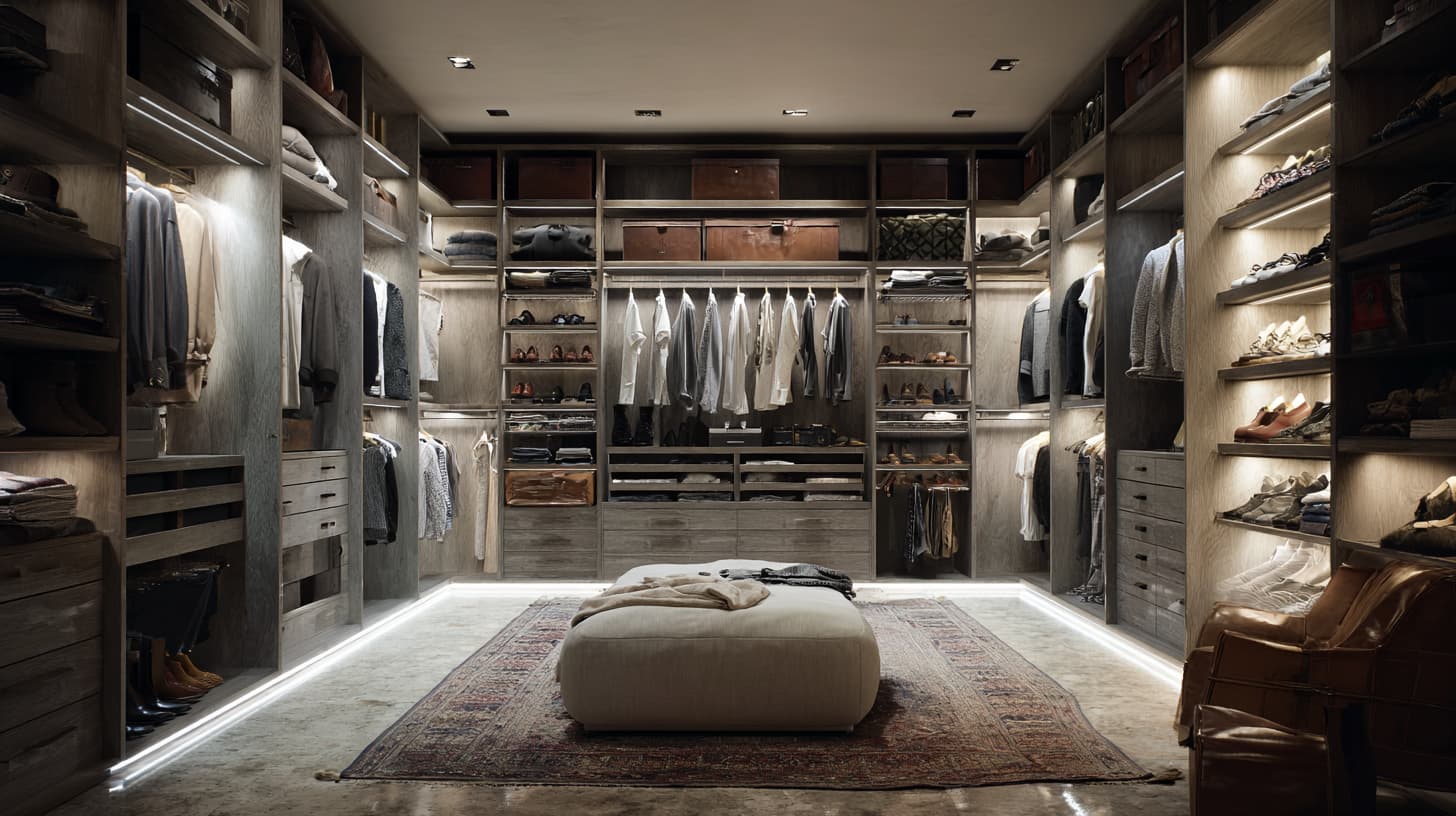
Case 4: U-Shaped Boutique Closet With A Calm Center
U-Shaped Boutique Closet With A Calm Center

Three walls of storage, but you design one wall as the “show wall.” That wall gets lighting and glass accents. The other walls are more closed and quiet.

Key move: treat one wall like a storefront. The rest supports it.

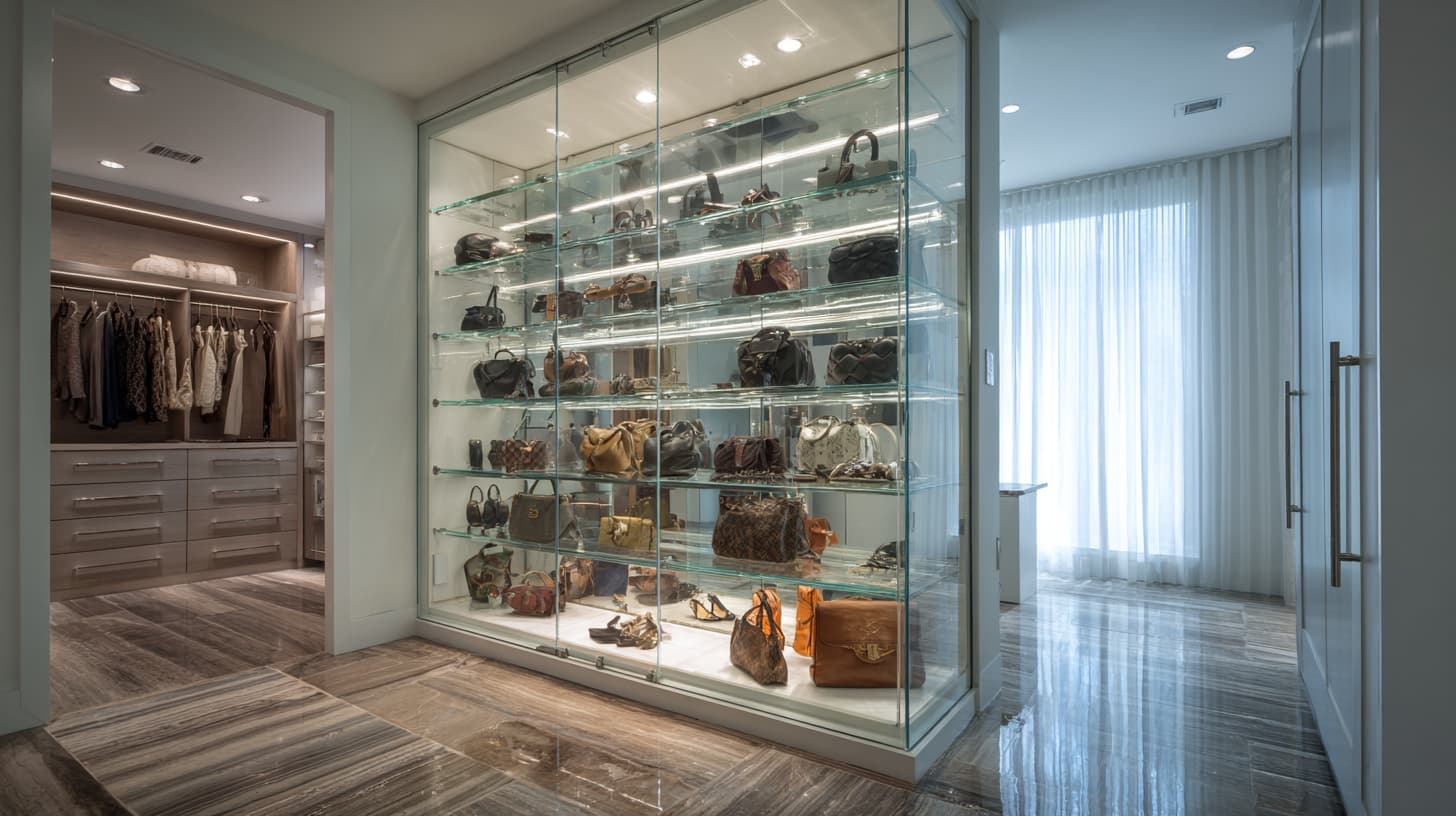
Case 5: Glass-Front Accent Zone For Bags & Shoes
Glass-Front Accent Zone For Bags & Shoes

You don’t glass everything. You glass one feature area and light it. It looks premium, but it also keeps you disciplined—only “worthy” items go there.

Key move: pair glass with a softer matte background so reflections don’t get chaotic.

Case 6: Hotel-Style Closet Connected To Vanity / Bath Zone
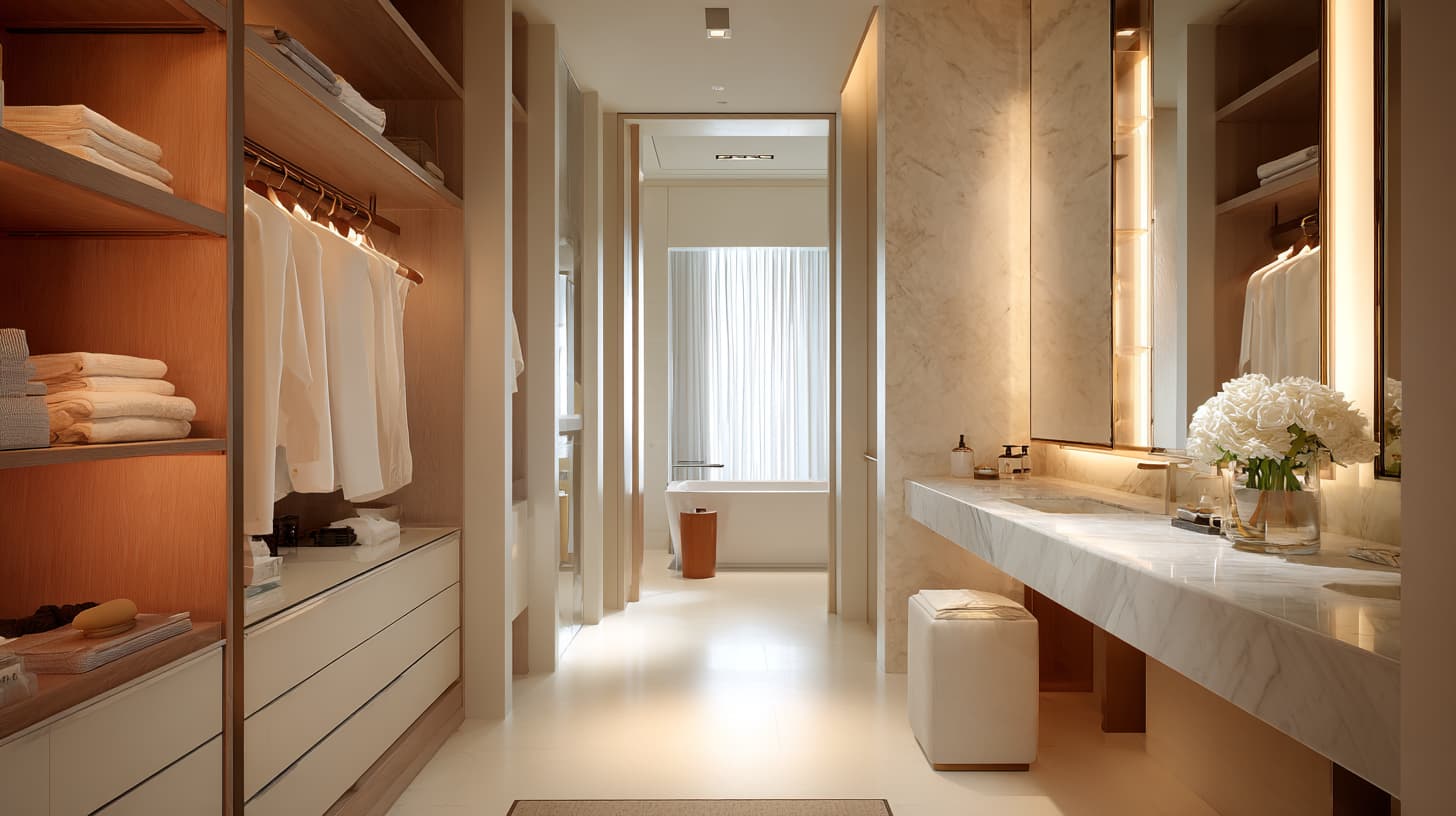
Hotel-Style Closet Connected To Vanity / Bath Zone

This layout feels ultra-luxury, but it requires discipline: moisture control, ventilation, and a clear “dry zone” boundary.

Key move: design a transitional moment—bench or rug zone—so the closet stays calm and dry.

9. Common Mistakes (And How To Avoid Them)

  • Mistake 1: Designing only for “storage volume”
    More shelves don’t mean more order. Too many shelves means more visible clutter.
  • Mistake 2: Forgetting the dressing experience
    A closet without a mirror and proper light is a warehouse.
  • Mistake 3: No landing zone
    Without an entry strategy, bags/shoes/jackets invade every surface.
  • Mistake 4: Over-complicating the design
    Luxury is not complexity. Luxury is calm, repeatable organization.

10. A Practical Design Process You Can Use On Any Project

  1. Map the room shape and circulation first.
  2. Choose the layout that matches the space and habits.
  3. Define the three zones: landing, dressing, storage.
  4. Decide your storage ratios (drawers vs hanging vs shelves).
  5. Design lighting in three layers.
  6. Keep finishes disciplined: one base, one accent, good hardware.
  7. Add one signature moment: a bench, glass zone, or a perfectly lit mirror wall.

That’s it. If you follow this order, the closet will feel intentional—not accidental.

Conclusion: Design a Walk-In Closet Around Your Daily Routine

A great walk-in closet is not only about having more storage. It is about creating a space that makes daily dressing easier, calmer, and more enjoyable. When the layout supports your movement, the lighting helps you see clearly, and every item has a practical home, the closet becomes more than a storage area—it becomes a well-designed part of your lifestyle.

Whether you are planning a small single-sided closet, a double-sided layout for two people, an L-shaped dressing area, or a full U-shaped boutique-style closet, the key is to balance storage capacity with comfort, visibility, and long-term organization. Start with your habits, choose the right layout, plan the right storage ratios, and add thoughtful details such as lighting, mirrors, drawers, seating, and moisture control.

If you are planning a custom walk-in closet, a professional design team can help turn your room dimensions, wardrobe needs, and preferred style into a practical layout with the right modules, finishes, and storage solutions.

 
FAQ 1: What is the ideal size for a walk-in closet?

The ideal size for a walk-in closet depends on the layout you choose. For a single-sided closet, a minimum of 4–5 feet wide and 5–7 feet long is recommended. For a double-sided closet, you’ll need at least 6 feet in width and 6–7 feet in length. A U-shaped closet requires more space—around 8 feet in width and 8–10 feet in length. A functional, comfortable walk-in closet typically needs at least 30–36 inches of aisle space for easy movement.

To make a small walk-in closet feel bigger, keep the design clean and organized. Use light colors for the walls, shelves, and cabinets. Maximize vertical storage with shelves and hanging racks. Consider mirrored surfaces or glass-front cabinets to create the illusion of more space. Additionally, incorporating good lighting, such as recessed lights or LED strips, can make the space feel more open.

Lighting is crucial for both functionality and aesthetics. Start with ambient lighting (ceiling lights) to illuminate the whole space. For tasks like dressing, use task lighting around mirrors, such as wall sconces or LED strips. Accent lighting inside shelves or cabinets can highlight your favorite items. Make sure the lighting has a color temperature of 3000K–4000K to show colors accurately and avoid harsh shadows.

For efficient shoe storage, consider a dedicated shoe zone. Use angled shelves or shoe racks for easy visibility and access. Stackable shoe drawers are also a great option for keeping shoes organized and dust-free. If you have limited space, you can also use the back of closet doors for over-the-door shoe organizers or hooks for quick storage.

Drawers are ideal for smaller items like accessories, underwear, and socks. They keep things organized and hidden from view. Shelves, on the other hand, are perfect for folded clothing, bags, and shoes that you use frequently. A combination of both—drawers for small items and shelves for larger items—will provide a functional and organized closet layout.

PA Home LOGO

PA Home

PA Home is a custom cabinetry and whole-house customization brand serving homeowners, contractors, and developers in Dubai and across the UAE. With expertise in kitchen cabinets, wardrobes, vanities, and full-home interior solutions, PA Home provides customized design and manufacturing services, with delivery and installation support available upon request.

Table of Contents
You may also like
U-Shaped Boutique Closet With A Calm Center
IKEA Kitchen Cabinets reviews
Top UAE wall panel manufacturers
Contact Us for Quotes
Whole-House Custom Cabinet Factory & Furniture Expert
PA Home Logo

Whether you’re looking for a fully customized or a refurbished option, we offer you the opportunity to design a style that’s uniquely yours.

Get Your Free Quote